Translated from Simplified Chinese by AI.Read the original
Header image: maybe at a train station? I don't know either
In early December 2022, new policies were gradually rolled out: COVID was placed under Class B infectious disease management, a 48-hour nucleic acid test was no longer required to enter/exit high-speed rail stations / airports, the communications itinerary code was taken offline... marking the end of the zero-COVID policy that had been in place for three years.
And as someone who lived through these three years, I feel it necessary to write an afterword for the three years I experienced.
High School
In December 2019, COVID was first detected at Wuhan's Huanan Seafood Market and began spreading across the country and the world.
From the confident claim that "it won't spread from person to person," to setting up designated hospitals and makeshift hospitals, to "static management" in various places because of the pandemic, the spread of COVID far exceeded my imagination.
In the early days of the COVID outbreak, I was on winter break and witnessed daily new infections grow from single digits to hundreds. The originally scheduled early return to school for make-up classes was also canceled because of the pandemic, and I stayed home taking online classes for more than 40 days. And for some reasons, it wasn't until the first semester of senior year that I barely managed to fill the high school knowledge gap caused by those 40-plus days of online classes.
Although the pandemic wasn't severe where I was, the school still came up with a lot of for-show epidemic prevention measures. The one that affected me most was the temperature check when entering school. Each school gate had only one temperature-check camera, and students had to line up to get their temperature checked before entering. I was already arriving at school late, and with the queue for temperature checks, being late became a common occurrence.
Daily temperature monitoring thus ran through my entire high school life: during morning / noon / evening study sessions, every student had to line up to get their temperature checked and registered. Apart from causing trouble for students and making me unable to nap well, this system had no effect at all.
Also because of the pandemic, sports meets were held only a few times—even though I probably wouldn't take part in a single event, who doesn't like having one or two consecutive days without class?
In the second semester of senior year, under the name of epidemic prevention, the school required all students to stay at school for make-up classes; I suppose that counts as an unforgettable pandemic-era thing.
Surreal
"Surreal" was also an important word for these three years.
Every year I thought, "Ah, next year probably won't be more surreal than this year," but every next year proved me wrong—each year was always more surreal than the last. These surreal things weren't only pandemic-related; although I can't clearly remember the specific news anymore (x), that surreal feeling is truly unforgettable. It's really quite a shame I didn't make a spreadsheet to record the year's surreal events.
The economic recession caused by long-term pandemic lockdowns, the persistent bureaucracy and formalism, and the excessive lockdown measures made for the so-called "zero risk" goal were probably the root of these surreal events.
Life
While zero-COVID was being implemented, COVID didn't have much impact on me or my family.
From December 2019 to early December 2022, neither I, my family, nor anyone I knew well was infected with COVID. But COVID still affected my life in many ways: I couldn't go to places I wanted to go, and my range of activity was limited to within the province; health codes were needed everywhere, and lining up for nucleic acid tests became routine; the school was locked down, and leaving campus required layers of approval.
But travel-related restrictions had a very limited impact on me, for the following reason:
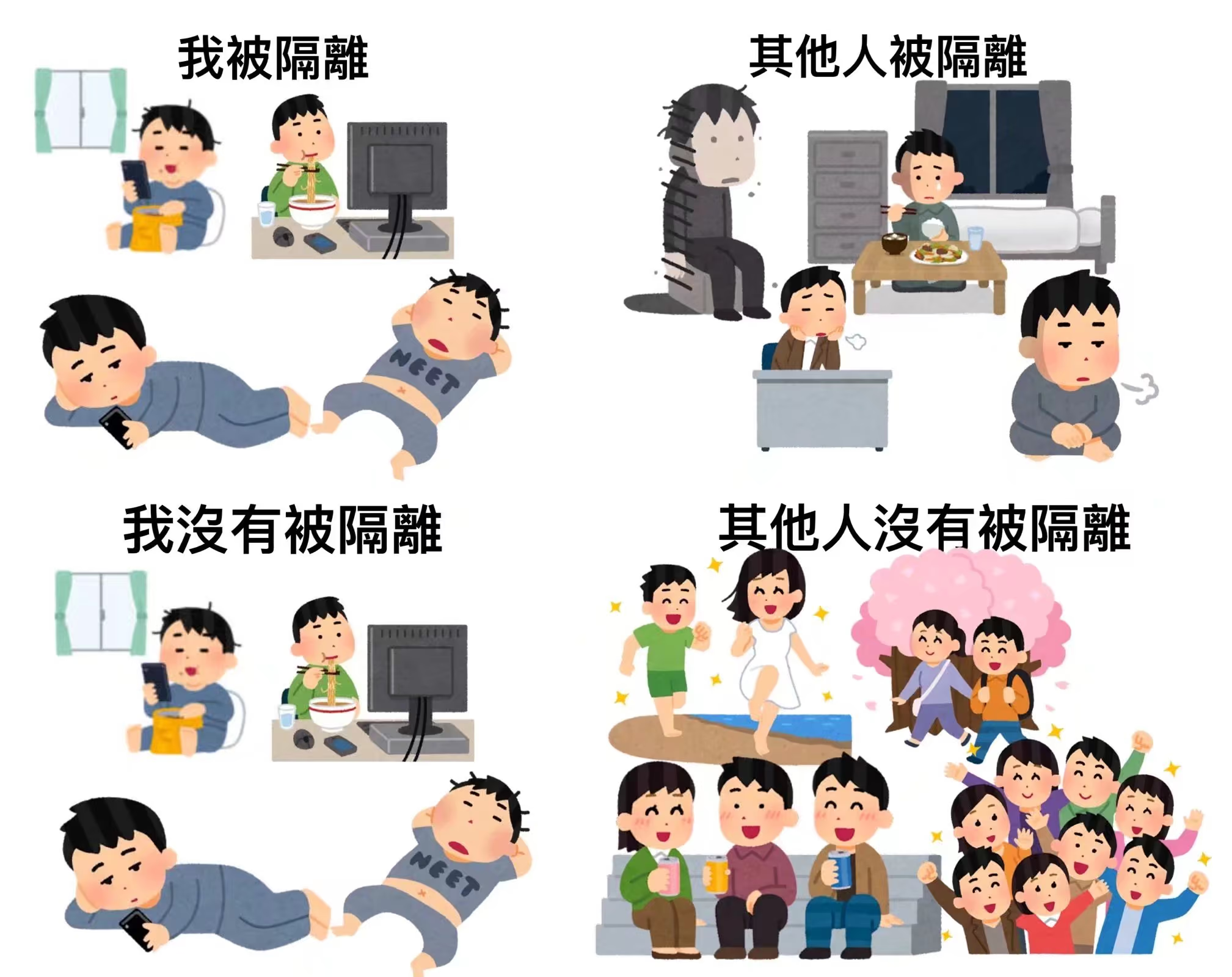
Even so, the feeling of being restricted still made me uncomfortable. For example, all kinds of "no XX unless necessary," all kinds of "X tests in X days," all kinds of nucleic acid test report requirements, etc.
But should I count myself lucky that these three years of epidemic prevention and control happened during an already boring and monotonous high school period, rather than at some other time in my life?
On December 7, 2022, I took the last high-speed train that required a 48-hour nucleic acid test and went home early.
White Paper
In mid-November 2022, for the first time I saw so many people on the mainland take to the streets to express their dissatisfaction; for the first time I saw views opposing the authorities be widely agreed with and spread by friends. These really struck me deeply.
About "incitement," this is what I think:
Incitement really is a very useful word. Anything they don't like, anything that threatens them, can easily be labeled "incitement."
Yes, maybe there really was involvement by people from overseas—but I'd rather believe that most people were expressing dissatisfaction accumulated over many years. This dissatisfaction cannot be summed up by "incitement"; on the contrary, it is exactly what the word "incitement" wants to conceal. If any tiny voice is simply categorized as "being incited" and thereby ignored, then I think there's no need for it to exist.
Not long after the White Paper protests were held successively in various places, epidemic prevention policy loosened.
Thinking about it now, "loosening controls" actually also happened to align with the government's wishes—the economic losses caused by lockdowns were already very large, and they couldn't keep managing it anyway; the White Paper movement was just an opportunity. And loosening up after the White Paper movement also conveniently showed that they were "responding to public opinion"? Of course, this is just my little speculation.
The 180° Flip-Style Reopening
In mid-December 2022, epidemic prevention policy underwent a huge 180° flip, and the zero-COVID policy suddenly ended.
Before December, the coronavirus was still a terrifying monster; after December, it became something like a "probiotic" in media reports.
Before December:
People's Daily: "COVID-19 sequelae will become a public health concern in the United States"
After December:
People's Daily: Currently there is no evidence that COVID has sequelae
This wave of sudden reopening really caught many people off guard. Panicked people began hoarding medicine, basically returning to the early-2020 state where medicine couldn't be bought anywhere. Although I'd always thought reopening was only a matter of time, I didn't expect it to be so fast, with no buffer time for society at all.
What followed was unprecedented large-scale infections, public unease, and the media's carnival of "turning funerals into celebrations." After that, the daily new case numbers were, even more so, as if locked by Trisolaran technology, severely out of touch with reality.
The turning point was December 25, 2022, when the National Health Commission announced it would no longer publish COVID infection data, completely giving up.
From today onward, daily epidemic information will no longer be published. Relevant epidemic information will be published by the Chinese CDC for reference and research use.
What About After That?
The zero-COVID policy ended overnight, and things like nucleic acid booths and sheet-metal fences quickly faded from view along with it. After reopening, friends around me kept testing positive, and COVID-19 suddenly seemed to become very close to me.
The nationwide three-year "fight against the epidemic" ended—whether looking at economic development or public will, this was inevitable. But the harm COVID-19, and repeated COVID-19, does to the body still cannot be ignored. Be sure to protect yourself.
Praying I don't get COVID in 2023(x